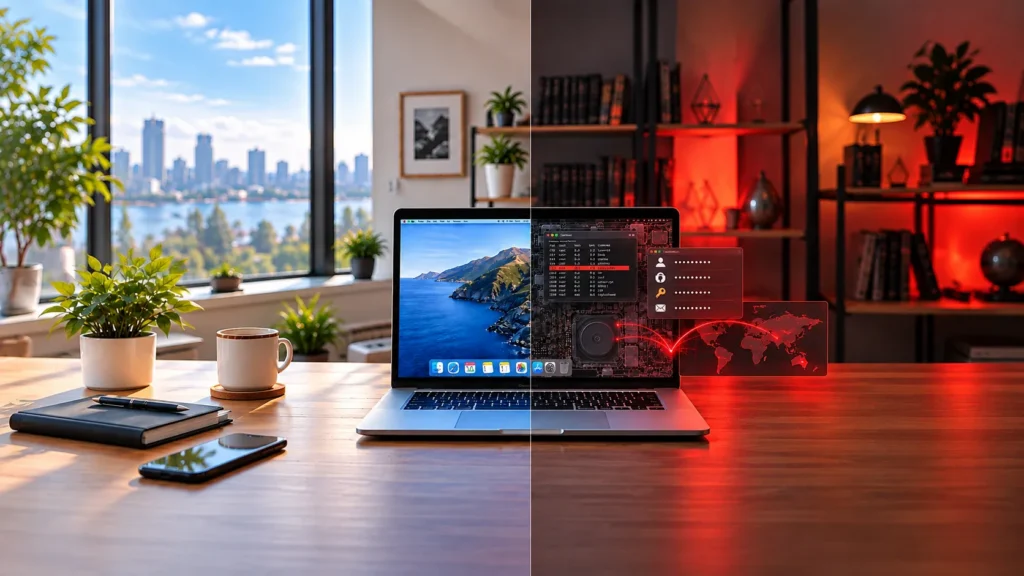



When traffic to the DORUZOVA online store surged over the summer, its owners had no reason to celebrate. Instead, they feared someone was scraping the site. They turned to Binary Confidence for a solution that could tell genuine shoppers from bots and check whether the store's own defenses were costing it sales.
The family-run Doružova brand designs and makes jewelry and home accessories. Its online store is both a sales channel and a place where customers discover its original designs. Over the summer, founder Dominika Strápek Ružová saw daily visits jump from around 1,000 to 7,000.
“During some waves, traffic was almost ten times higher than usual. At first, many of the visits came from Singapore. Later, they appeared from other locations too,” Dominika explains. Her store had faced a similar situation before. Because it does not normally ship to those countries, she had reason to be on alert.

Chinese bots steal content and damage reputations
Anyone selling original designer products knows that automated copying of webpages, photographs and text is one of the biggest threats to the business. It is known as “scraping.” Swarms of bots using East Asian IP addresses do it, and original creators, including Dominika, later find their designs and photos on overseas marketplaces, mostly in China.
Beyond the theft of intellectual property, a serious problem in itself, this also has a damaging effect on customer trust. Customers may find an identical-looking product on a Chinese marketplace and accuse the Slovak online store of selling a cheap copy. Marketplaces dealing in fake goods thus benefit twice: they get a beautiful design for free while undermining the reputation of its creator and European competitor.
Blocking countries worked only briefly
The owners of doruzova.sk first installed Shopify apps to block specific countries the store does not ship to. This solved the problem only briefly. “It worked at first. Then they started getting around it with VPNs,” Dominika recalls. Visits began coming through countries that could also be home to genuine customers. Continuing to block entire countries would have shut out shoppers too.
The protection they installed relied on JavaScript running in the browser, while the suspicious bots did not run it. If a check starts only after a page loads, some automated requests can get through before they are assessed. That was when it became clear the store needed another layer of protection.
The online store closed for a week, but the drop in sales had no clear cause
Dominika and her colleagues did not know whether the surge could overload the site, disrupt checkout or distort the data they used to assess their advertising. Rather than put further orders at risk, they closed the online store for about a week. For an online brand, that meant an immediate interruption to sales and revenue.
Sales fell during the bot activity, but the investigation did not establish that the bots or a Shopify outage caused the decline. On some days, analytics showed visits without recording any steps toward a purchase. It remains unclear whether customers were not buying or whether their actions were simply not captured.
Binary Confidence experts moved protection in front of the online store
Binary Confidence deployed Cloudflare in front of the Shopify-based store. Suspicious requests could then be assessed before they reached the site. The team set rules for scrapers and other bots, including challenges for traffic from outside the store's main markets.
At the same time, the team kept the store accessible to customers in the countries Doružova sells to, as well as to services important for advertising and search. “When a bot changes country or IP address, adding another ban means chasing it around the same map. So we put protection in front of the store and checked that genuine customers could still get through,” explains Jozef Rusnák of Binary Confidence.
That setup does not mean every bot disappears for good. Attempts to bypass the protection changed after the initial deployment, and the rules had to be adjusted. Ongoing monitoring is what separates effective protection from a one-off measure such as a list of blocked IP addresses.
We also checked that protection was not getting in the way of sales
For an online store, counting blocked requests is not enough. It matters just as much whether a genuine customer can reach a product, add it to the cart and complete an order. The team therefore tracked human visits, conversion rates and orders. Orders continued to come through even while bot activity persisted. The protection had not stopped normal shopping.
This kind of check also has technical limits. Shopify's payment flow and Shop Pay do not pass entirely through the same protective layer in front of the site. Completed orders and suspicious abandoned checkouts therefore need to be tracked separately. In the end, Doružova gained adjustable protection at the store's entry point and a clearer picture of what still needed monitoring.
What other online stores can learn from this case
A sudden rise in traffic is not automatically good news. Compare it with traffic sources, visitor countries, behavior on product pages, carts, and orders. If visits multiply but genuine interest in products does not, find out why before using those numbers to make advertising or sales decisions.
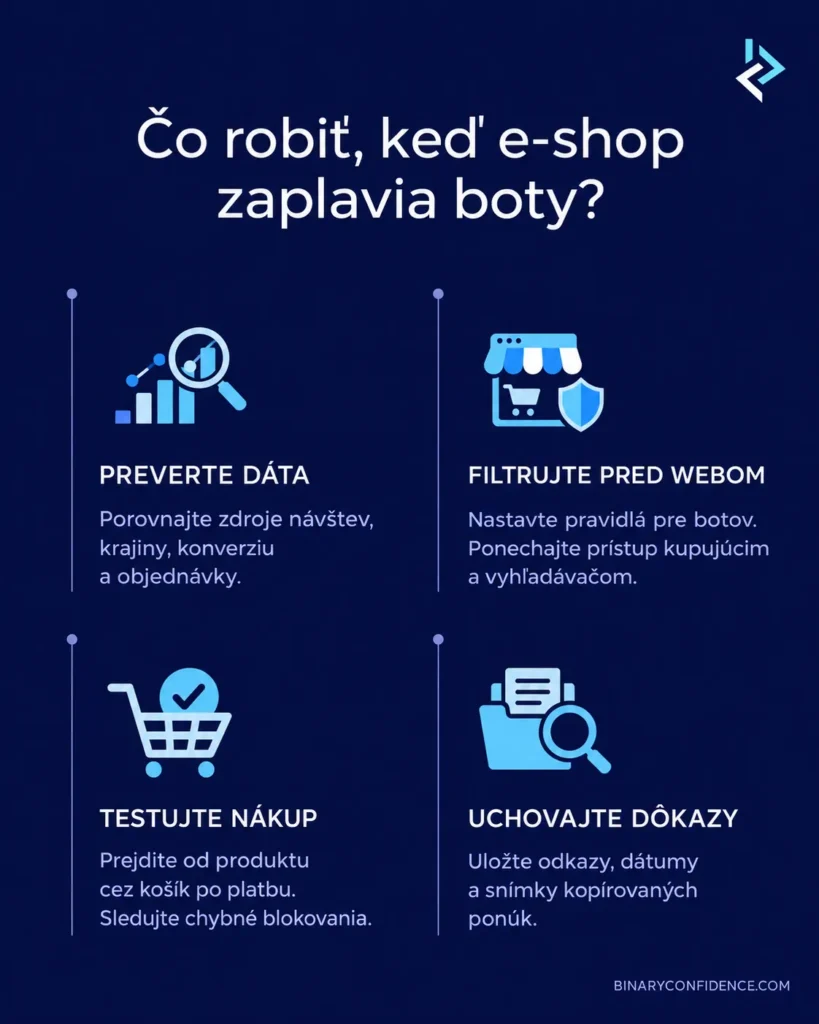
Keep customers in mind when responding. Before blocking an entire country, check whether buyers or legitimate services are coming from there. Test new rules as a normal visitor, from the first product page all the way to payment. Then review cases where the protection challenged or blocked a visit.
Prepare a response before you have to close your store
Assign someone to spot unusual numbers, a store administrator who can check the purchase flow, and a security specialist who can manage the rules in front of the site. “The goal isn't to block as many requests as possible. The goal is to keep the store selling to real people and be able to respond when bots change their approach,” Rusnák explains.
If your photos or designs appear elsewhere, save the links, dates, seller details and screenshots of the listings. Technical protection for your website will not resolve copyright infringement on a marketplace.
The Doružova case shows that company size does not determine whether bots will crawl and potentially scrape its website. Today, anyone selling a product could be a target. What may determine whether your business survives is whether it notices the problem and can respond effectively without bringing its own sales to a halt.